
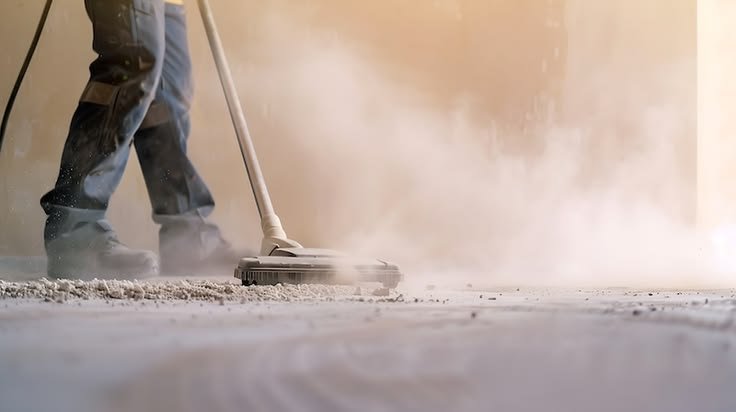
Ask any general contractor what comes after the final inspection is complete, and odds are good that “cleaning” won’t even be on their radar. Their task is to erect a structure that will stand up to code. The removal of dust from vents, paint from floors, adhesive from cabinets? Not in their wheelhouse, and probably not within their crew’s capacity.
So if you have just finished off a construction or renovation project in Sacramento, only to find yourself standing in an area that looks “finished,” but is still gritty under your feet, you are not crazy. This is precisely why post-construction cleaning exists. Here is exactly what it entails, step by step.
What Is Post-Construction Cleaning, Exactly?
Post construction cleaning (also referred to as post renovation cleaning, construction cleanup, or post construction cleaning) is a thorough cleaning process conducted after the construction process ends but before the building gets occupied. The focus is construction-specific mess: fine dust, dried adhesive, paint overspray, that kind of thing, in places regular cleaning crews tend to skip entirely. Vent interiors. Light fixture housings. Window tracks. Behind cabinet doors that haven’t even been opened yet.
A few things make it different from a standard clean:
- It calls for HEPA filter vacuums. Regular vacuums just stir fine construction dust back into the air instead of trapping it.
- Removing dried paint and caulk without scratching a brand-new surface takes technique, not just effort.
- New materials react differently to different products. What’s safe on sealed hardwood isn’t necessarily safe on quartz.
- A lot of the dust hides. Behind trim, inside unopened cabinets, in places nobody thinks to check on move-in day.
The 3 Phases of a Post-Construction Clean
Most jobs break down into three stages. Skip one and dust or grime tends to reappear within days.
Phase 1: Rough Clean
Happens during the tail end of construction, or right after. The goal here isn’t polish, it’s getting the space to a safe, walkable baseline.
- Hauling out large debris (scrap drywall, wood offcuts, packaging)
- Disposing of construction trash and bulk waste
- A first pass of sweeping and vacuuming to clear loose dirt
- Clearing walkways so the space is actually safe to move through
- Pulling protective coverings, like plastic sheeting, tape, and floor paper
Phase 2: Detail Clean
This is the longest stage and marks the stage at which the area begins to look really finished rather than simply cleaned out.
- Wall dusting, ceiling, baseboards, and trims
- Cabinet and counter cleaning, both inside and out
- Polishing newly installed fixtures and hardware
- Vacuuming and wiping down HVAC vent and return ducts and vents
- Window cleaning throughout interior, tracks and sills included (they trap more dust than you think)
- Light fixture, switches and outlet plate cleaning
- Detailing kitchen and bathrooms, sink, toilet, bathtub, and shower
- Floor cleaning for type of floor, hardwood, tile, LVP or carpet all need different care
Phase 3: Final Touch-Up
Right before handoff or move-in. This is a last pass to catch anything that settled or got missed.
- One more dusting round across everything
- Fingerprints and grease left by installation crew members; there will always be a few
- Spotless glass and mirrors
- Shine fixtures, hardware, and appliances
- Final vacuum and mopping of all floors
- Touch-ups on the exterior as needed such as cleaning of entrance areas or exterior glass surfaces
What Surfaces and Areas Get Cleaned?
| Area | What's Included |
|---|---|
| Floors | Vacuuming, mopping, dust and debris removal, polish for hard surfaces |
| Walls & Baseboards | Dust wipe-down, scuff and smudge removal, spot cleaning |
| Windows & Glass | Interior glass, tracks, sills; exterior glass if it's in the scope |
| Kitchens | Cabinet interiors and exteriors, countertops, sinks, appliance exteriors |
| Bathrooms | Toilets, tubs, showers, vanities, mirrors, fixtures |
| HVAC & Vents | Vent covers, air returns, accessible ductwork dusting |
| Light Fixtures | Dust and residue removal from fixtures, bulbs, switch plates |
| Doors & Hardware | Handles, hinges, frames, tracks |
| Cabinetry | Interior shelving, exterior wipe-down, hardware polish |
What's Usually Left Out
Worth knowing up front so nothing catches you off guard. Most companies, Brass Tack included, treat these as separate from a standard post-construction clean.
- Hazardous materials like asbestos or lead paint. That’s a certified abatement job, not a cleaning one.
- Structural issues, loose wiring, plumbing leaks, drywall damage.
- Carpet steam cleaning or deep shampooing (sometimes available as an add-on, worth asking about).
- Pressure washing siding or large exterior hardscape.
- Yard or landscaping debris unrelated to the build itself.
Rough Clean vs. Final Clean: What's the Real Difference?
Here’s a room-by-room breakdown of what most Sacramento deep cleaning services include:People ask us this a lot: do you need a rough clean, or a final clean? Honestly, most jobs need both, just at different points in the timeline.
Rough clean happens early. It’s about clearing bulk debris so the space is safe to work in, nothing more. Final clean comes at the very end, and it’s about the details that actually make a space feel move-in ready, not just cleared out.
Booking only one of the two is probably the most common reason a “cleaned” space still feels unfinished when the crew leaves.
Is It Worth Hiring a Professional?
It is different from regular house dust in several ways. For one, it is fine; for another, it penetrates HVAC units, lodges in grout lines that are not sealed off, and a regular vacuum without HEPA filtration will merely stir it up again.
A couple of reasons for outsourcing it:
- Filtration of HEPA actually involves removing fine dust and not releasing it back into the environment.
- Knowing what items are safe for use on various surfaces will ensure that the new floors, countertops, and paint jobs on the walls do not get damaged.
- It is a time saver. This process, done the right way but without commercial equipment, can turn what would have been a weekend project into an almost week-long job.
- Construction dust that floats in the air can last for weeks if not completely eliminated.
- Professionals catch the small stuff. Dust inside vents, grime behind cabinet doors, grit in window tracks, the things that get missed when someone’s rushing through a DIY clean on move-in day.
Frequently Asked Questions
How long will the process of post-construction cleaning take?
It may vary according to the size and scope, however usually the residential cleanup is finished within one day. For large commercial premises, it will take from two to three days.
Is it necessary for me if I have had only a minor construction such as only one room?
Yes. Minor constructions like remodeling of one room, for example kitchen or bathroom also produce dust that gets into other parts of the house.
Is this not the same as a normal move-in clean?
It isn’t exactly. A move-in clean is concerned with the grime in general and whatever the former tenants have left behind. However, post-construction clean-up involves the grime, adhesive, and paint residue which will come after construction or renovation.
Can this type of cleaning actually clean paint splatter and adhesive?
It can. There is a special method used by the clean-up process for removing dried paint and adhesive from the surface without causing any scratches.
What is the ideal time for conducting cleaning after construction?
It should be conducted earlier rather than later, ideally within one to two days. More time will result in dust getting embedded into air ducts and carpets.
Are you ready for the move-in on your Sacramento property?
Brass Tack Cleaning provides residential and commercial post-construction clean-ups in Sacramento, Midtown, Arden-Arcade, Carmichael, Rancho Cordova, and Orangevale with a scope of work that is very well-defined.